Boiler Replacement in Far Rockaway, Queens
Professional heating load calculations, precision sizing, code-compliant equipment installation, and oil-to-gas conversions for residential properties across Queens County.
When Heating System Replacement Becomes the Practical Path
Every heating boiler has a finite mechanical lifespan. While routine maintenance and timely repairs can keep a well-built cast-iron boiler functioning for twenty to thirty years, there comes a point where continued repairs become an expensive stopgap. Property owners evaluating boiler replacement Far Rockaway Queens typically face one of several critical equipment thresholds:
- Cracked Heat Exchanger Sections: A fractured cast-iron block cannot be welded or sealed safely. Once water leaks directly through combustion chambers or block seams, replacement is the only safe solution.
- Obsolete Replacement Components: Older heating boilers with discontinued gas valves, obsolete electronic ignition modules, or discontinued low-water cutoff controls often cannot be brought back into service compliant with modern safety standards.
- Persistent Mid-Winter Breakdowns: If a heating system requires multiple service dispatches each winter season, compounding repair costs and the constant risk of frozen water pipes warrant investing in a modern, reliable replacement.
- Excessive Fuel Consumption: Legacy atmospheric heating systems operating below 70% annual fuel utilization efficiency (AFUE) waste substantial amounts of fuel compared to modern cast-iron or condensing alternatives.
Before deciding on replacement, it is always worth verifying whether a cost-effective mechanical repair is feasible. Learn about our diagnostic troubleshooting options on our boiler repair in Far Rockaway homepage.
Precision Boiler Sizing: Why Square Footage Is Never Enough
The single most critical step in any heating replacement project is accurate equipment sizing. An incorrectly sized boiler creates serious performance and structural problems for decades:
Steam Heating Sizing (EDR Measurement)
Steam systems must never be sized using building square footage or general room dimensions. A steam boiler must be matched directly to the total connected radiation in the building, measured in square feet of Equivalent Direct Radiation (EDR). Every radiator, riser, and uninsulated steam main condensing steam must be inventoried. Sizing a steam boiler too small causes high water line fluctuation, wet steam, and cold distant radiators. Oversizing causes intense fuel consumption and rapid short-cycling.
Hydronic (Hot Water) Sizing (Manual J Calculation)
In contrast to steam, hot-water boilers are sized based on the actual heat loss of the building envelope under outdoor design temperature conditions. Factors include insulation levels, window types, coastal wind exposure, and wall construction common across Far Rockaway and Bayswater residential homes.
Fuel Conversions, Chimneys, and Coastal Venting
Many older residences along Beach 19th Street and surrounding Queens blocks still operate aging heavy oil boilers. An oil-to-gas conversion eliminates the need for basement oil storage tanks, messy seasonal filter cleanings, and soot accumulation. However, a successful conversion requires evaluating several practical factors:
- Utility Capacity: Verifying that the existing National Grid gas service line and gas meter can supply adequate cubic feet per hour (CFH) under full boiler and domestic hot water firing conditions.
- Chimney Flue Integrity: Oil exhaust produces sulfur deposits that coat chimney interiors. When converting to natural gas, a new stainless steel chimney liner is often mandatory to prevent acidic condensation from dissolving older brick mortar joints.
- Coastal Combustion Air: Salt air in coastal environments accelerates corrosion on poorly ventilated metal ductwork. Replacement installations ensure code-compliant fresh air intake directly to the boiler room.
Permits, NYC Codes, and Post-Installation Commissioning
Installing a replacement boiler in New York City requires strict adherence to administrative and safety codes. Work must be filed with the NYC Department of Buildings (DOB), comply with the NYC Fuel Gas Code, and fulfill applicable energy conservation standards.
Proper installation also involves critical post-installation commissioning:
- Boiler Skimming (Steam Systems): New boiler castings are coated with protective manufacturing oils. If not thoroughly skimmed off the water surface through a dedicated skim tapping over several hours, these oils cause surging, violent priming, and dirty water line bouncing.
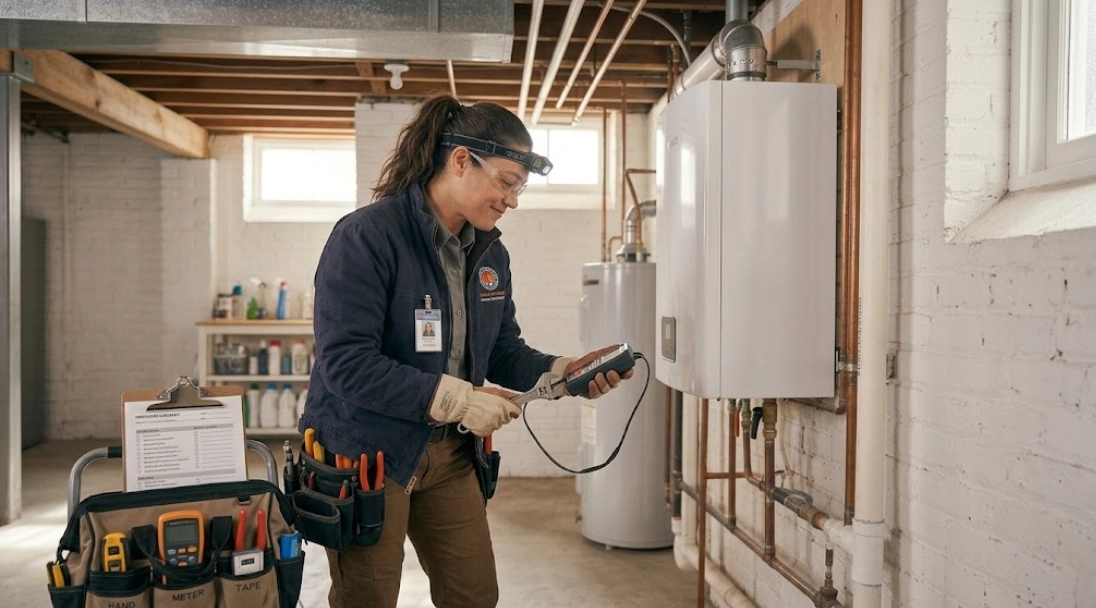
- Combustion Analysis: Testing carbon monoxide levels, flue gas temperature, and draft pressure with digital analyzers ensures optimal burner efficiency and safe exhaust evacuation.
- Radiator Balancing: Adjusting main line air vents and radiator valves ensures heat distributes evenly to all rooms. Read more about radiator maintenance on our steam heat and radiator repair in Far Rockaway page.
For details on service areas where replacement assessments are available, see our Far Rockaway service areas overview.
Frequently Asked Questions About Boiler Replacement
Key questions homeowners ask when considering a new heating boiler in Far Rockaway.
How is a replacement steam boiler sized for a Far Rockaway home?
Unlike forced air or hydronic systems, steam boilers must never be sized based on room square footage alone. Steam boilers must be sized precisely to match the total connected radiation—measured in Equivalent Direct Radiation (EDR)—of all existing radiators and main piping. Sizing a steam boiler too small leads to severe short-steaming and cold radiators, while oversizing causes massive fuel waste and rapid short-cycling.
What permits and NYC filings are required when installing a replacement boiler?
In New York City, boiler replacements require appropriate work permits through the NYC Department of Buildings (DOB), along with gas authorization and utility sign-off from National Grid. Work must comply with the NYC Fuel Gas Code, Energy Conservation Code, and applicable NYC DEP clean air registrations for qualifying input ratings.
What are the advantages of converting an old oil boiler to natural gas?
An oil-to-gas conversion eliminates dirty oil deliveries, noisy oil burner motors, fuel pump leaks, and soot accumulation in the chimney. Natural gas boilers run cleaner, require less messy seasonal servicing, and operate with higher seasonal efficiency, provided the local utility gas line and meter can deliver adequate cubic feet per hour (CFH).
How does a technician know that a boiler must be replaced rather than repaired?
Replacement is necessary when the cast-iron heat exchanger block is cracked, leaking water between section joints, severely thinned by internal corrosion, or when critical safety controls are obsolete and unobtainable. External component faults like bad valves, pumps, or switches are candidates for routine repair.
Plan Your Heating Replacement with Confidence
Reach our telephone desk to discuss boiler replacement options for your Far Rockaway residential property.
Call (315) 202-8009