Steam Heat & Radiator Repair in Far Rockaway, Queens
Eliminating violent pipe banging, balancing uneven room temperatures, replacing leaking supply valves, and restoring comfort across coastal Queens homes.
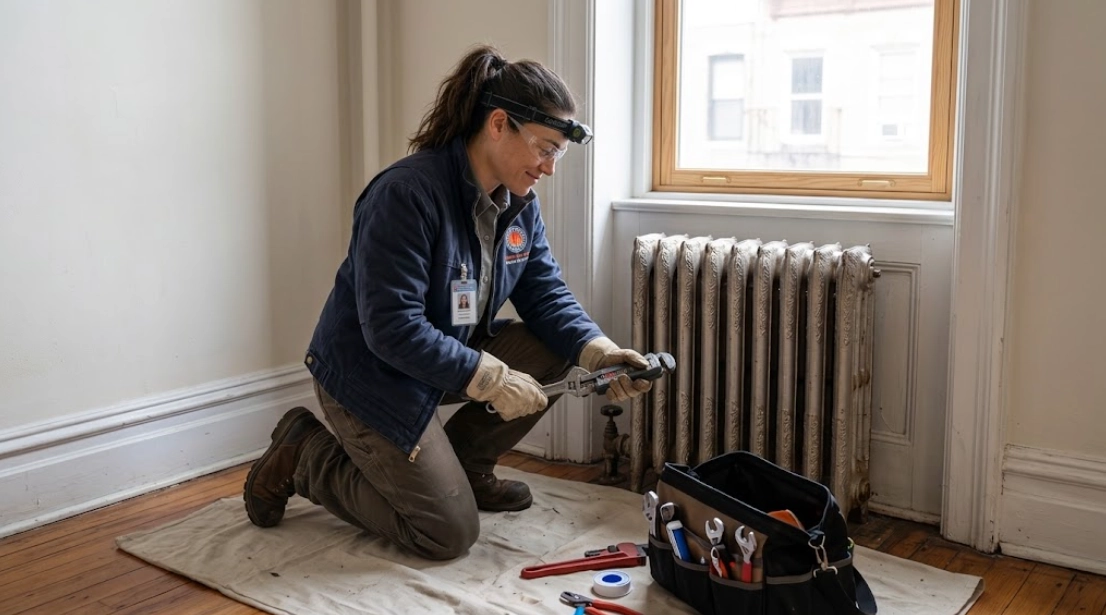
Troubleshooting Cast-Iron Steam Radiators and Heating Mains
Cast-iron steam radiators are an enduring architectural feature in historic residential properties across Far Rockaway, Bayswater, and coastal Queens. Designed to deliver gentle, radiant warmth during bitter Atlantic winter winds, these systems depend on delicate thermodynamic principles. When working as designed, steam moves silently and condensation returns smoothly to the boiler.
However, when components wear out or settling foundations alter piping slopes, heating comfort quickly deteriorates. Property owners searching for dependable radiator repair Far Rockaway Queens commonly struggle with rooms that never warm up, radiators that hiss constantly, or terrifying loud banging that rattles floors. Understanding why these symptoms occur allows technicians to fix the mechanical source of the disturbance rather than masking it.
Understanding Banging Steam Pipes (Water Hammer)
The loud, startling clanging often heard when steam heat activates is known as water hammer. It is not normal, and over time it can crack cast-iron fittings, break pipe joints, and cause dangerous basement leaks:
- How Water Hammer Happens: When steam leaves the boiler, it travels through pipes at speeds between 30 and 60 miles per hour. If liquid condensate gets trapped in a sagging pipe or a flat radiator instead of draining back, the incoming rush of steam sweeps up the water and hurls it into pipe elbows or radiator end sections with immense hydraulic force.
- Incorrect Radiator Pitch: In a single-pipe steam system, every radiator must slope gently downward toward the supply valve—roughly a quarter-inch drop per foot. If the floor beneath the radiator legs settles or shims slip out, water pools at the far end of the radiator, causing intense banging and spitting vents.
- Partially Throttled Valves: Homeowners often try to turn down excessive room heat by half-closing the radiator valve. On single-pipe steam systems, this traps returning water in the radiator while steam tries to force its way in, triggering violent clanging.
Air Vents, Radiator Valves, and Steam Traps
Proper steam heating depends on the small mechanical controls mounted on each radiator and main distribution line:
Radiator Air Vents
Before steam can fill a radiator, cold air trapped inside must have an exit pathway. Radiator air vents contain a heat-sensitive bimetallic element or alcohol-filled bellows. When cold air is pushed out by rising steam, the vent remains open; once steam reaches the vent, the heat expands the element, sealing the vent shut to prevent steam loss. If the vent becomes clogged with mineral deposits or rust, it remains permanently closed, leaving the radiator completely cold.
Steam Supply Valves & Traps
Radiator shutoff valves control steam entry. Over decades of operation, internal brass stems corrode and graphite packing around the nut dries out, causing water dripping on floors and steam vapor escaping. On two-pipe steam systems, thermostatic steam traps on the radiator outlet let condensate and air escape into the return line while holding steam inside the radiator. A failed trap allows live steam to blow straight into dry returns, disrupting heating balance across the entire building.
Steam Radiator Valve Replacement and Repair Process
Replacing a defective or seized steam radiator valve requires specialized equipment and plumbing expertise:
- System Cooldown and Isolation: The heating system must be shut down and thoroughly cooled. Attempting to disassemble steam valves while under pressure risks severe thermal burns.
- Spud Removal and Union Inspection: The valve is disconnected at the radiator union spud. If the existing brass spud threads inside the cast-iron radiator are stripped or fused with corrosion, an internal radiator spud wrench is used to safely extract and replace the fitting without cracking the radiator casting.
- High-Temperature Sealing: The new heavy brass steam valve is installed using heat-resistant thread sealants engineered to withstand thermal cycling and high-temperature steam vapor.
- Pitch Verification and Shimming: The radiator is carefully leveled and shimmed with hardwood or brass spacers to guarantee optimal gravity condensate drainage back through the valve.
If you suspect broader heating equipment issues in your basement, visit our main boiler repair in Far Rockaway page, explore options for boiler replacement, or see how domestic hot water systems operate on our water heater repair guide. Local neighborhood coverage details are available on our service areas page.
Frequently Asked Questions About Radiator Repair
Answers to common steam heating and radiator questions in Far Rockaway.
Why is my steam radiator completely cold while the boiler is running?
The most frequent cause of a cold radiator on a steam system is a failed air vent. In single-pipe steam heating, air must escape through the vent before steam can enter the radiator. If the internal float in the air vent is stuck shut with mineral scale or rust, air remains trapped inside, completely blocking incoming steam. Other causes include a shut supply valve or an incorrectly pitched radiator.
What causes loud clanging and water hammer in steam pipes?
Water hammer happens when high-speed steam (moving up to 30 to 60 miles per hour) slams into puddles of water trapped in the piping or radiator base. Trapped water usually accumulates because a radiator is pitched the wrong way, a supply valve is partially closed instead of fully open, or a supply riser has sagged over time.
Can a leaking radiator shutoff valve be repaired without replacing the radiator?
Yes. Most radiator leaks occur around the valve stem packing nut or at the spud union connection where the valve joins the radiator. In many cases, replacing the internal graphite packing or installing a new brass radiator valve resolves the leak without requiring replacement of the heavy cast-iron radiator.
Should a one-pipe steam radiator valve ever be partially closed to regulate heat?
No. On a one-pipe steam system, the radiator shutoff valve must be 100% fully open or 100% fully closed. In a one-pipe system, both incoming steam and exiting liquid condensate must pass through the exact same valve orifice. Leaving the valve half-open restricts drainage, trapping condensate and causing violent water hammer and leaks.
Restore Silent, Even Warmth to Every Room
Connect directly with our Far Rockaway heating dispatch team to diagnose radiator and steam pipe problems.
Call (315) 202-8009